
November 28, 2026
Written by SHAHZEB KHAN
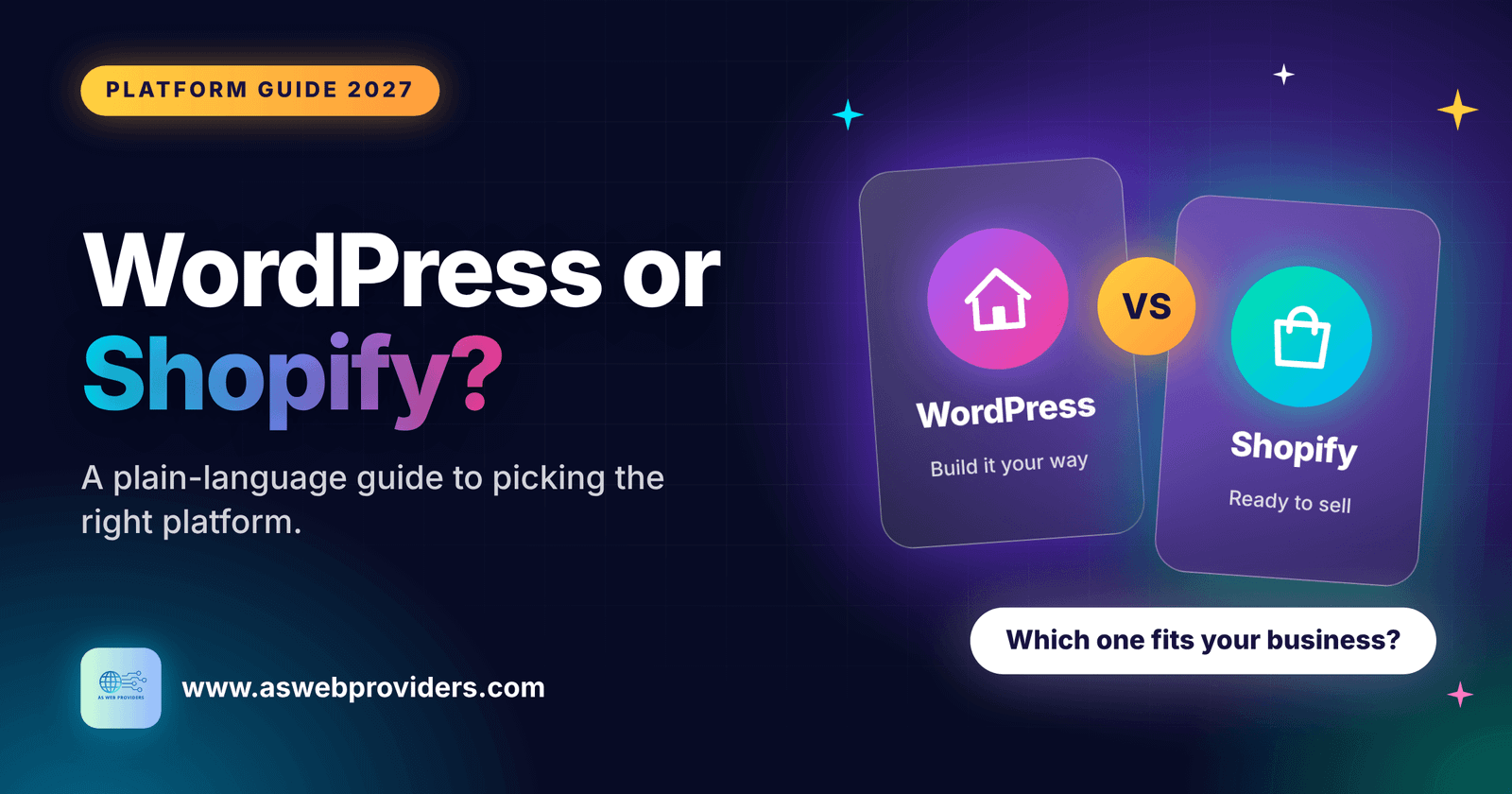
WordPress or Shopify? A Plain-Language Guide to Choosing the Right Platform for Your Business
Not sure whether to build on WordPress or Shopify? This guide explains the real difference in everyday language, so you can pick the platform that suits your products, your budget and the way you like to work.
Pick the Platform That Fits Your Business, Not the One Everyone Talks About.
Two friends decide to start selling online in the same week. One spends days comparing feature lists and ends up more confused than when she began. The other asks a simpler question: “How do I want to run this business day to day?” He makes his choice in an afternoon. The second approach works better, because WordPress and Shopify are not rivals fighting for the same job. Each one suits a different style of running a business.
Think of It as a House Versus an Apartment
WordPress is like building your own house. You choose the plot, the layout and the finishes, and you can change almost anything later. In return, you are responsible for the upkeep: the hosting, the updates and the security.
Shopify is like renting a furnished apartment in a well-managed building. It is ready quickly, the basics are handled for you, and someone else looks after the structure. In return, you work inside the rules of the building and pay rent every month.
Neither is better in every case. The right one depends on what you need from your space.
What You Are Really Choosing
Most comparisons list features. Begin instead with what you want this website to do for your business.
If you mainly want to sell products, take orders and manage stock, Shopify is built exactly for that job. If your site needs to show services, publish articles, display your past work or include unusual features, WordPress leaves more space to build them, whether or not you also sell products. WordPress can also sell products through the WooCommerce add-on, so it is not limited to information pages.
Building the Website
On WordPress, a developer can shape nearly anything: custom pages, booking systems, member areas, special forms and links to other tools. That freedom is the main reason many businesses choose it.
On Shopify, the store tools come ready to use. Products, payments, shipping settings and order tracking are already in place, so the work focuses on setting up your catalogue and brand. When a store needs something unusual, it may need a developer or an extra paid app.
Look and Design
WordPress lets you design pages almost without limit, using page builders and themes, and a designer can create a layout that looks like nobody else’s.
Shopify offers polished store themes that look professional from the start. Within those themes you can adjust sections and colors easily. Deeper changes can need some code or a paid add-on.
If a very individual look matters to your brand, WordPress gives more freedom. If you want an attractive store with less effort, Shopify gets you there faster.
How Fast Can You Launch?
Shopify is usually the quicker route for a simple store, because hosting and store tools are already included. A well-prepared small shop can go live in a short time once the products and photos are ready.
A simple business site on WordPress can go up fast too, as long as you start from a ready-made theme. A custom design or a store with special features takes longer, because more is being built from scratch. The honest answer is that preparation matters more than the platform. Clear product details, good photos and decisions made early save more time than any tool.
What It Really Costs
WordPress itself is free, but a working site still needs hosting, a domain name, often a premium theme or some paid plugins, and someone to maintain it. The costs are spread across several small items, and you decide how much to spend on each.
Shopify charges a monthly plan, with extra spending on themes, apps and payment-related fees depending on your setup. The monthly bill is easy to predict at first, but it can grow as you add features.
Add up what you will spend over the next one to two years, not only the opening bill. The cheaper start is not always the cheaper choice later.
Being Found on Google
Both platforms can rank well when they are set up properly. WordPress has a wide range of SEO tools, which gives you detailed control over titles, links and page settings. Shopify includes the essentials, such as editable titles, descriptions and automatic site maps, and covers what most stores need.
What helps most is not the platform. It is clear page titles, useful product descriptions, fast loading and content that answers customers’ questions.
Upkeep and Safety
With WordPress, you or your developer handle updates, backups and security, unless your hosting plan covers some of it. Skipping this work is how many sites end up broken or hacked.
With Shopify, the company looks after the hosting and the platform’s security, which means less technical work for you. Either way, you still need strong passwords and regular checks.
A Quick Way to Decide
If you need a flexible business website, want control over every detail, or plan to add unusual features, lean towards WordPress.
If you mainly want to sell products, prefer to avoid technical upkeep, and like a ready-made system for orders and stock, lean towards Shopify.
If you are still unsure, describe your plans for the next two years to a developer. The platform that handles your growth without heavy rebuilding is usually the right one.
Mistakes to Avoid
Choosing because a friend uses the platform is common, and your needs may be different. Another mistake is looking only at the starting price and ignoring the add-ons. Some owners pick the most powerful tool when a simpler one would do the job. Others forget about upkeep and leave a WordPress site withoutupdates for months. A short chat with someone who builds on both platforms can prevent mostof these problems.
How AS Web Providers Can Help
AS Web Providers is an IT and web development company. We build websites on WordPress, WooCommerce and Shopify, along with Wix, Squarespace and Webflow, and our work covers website development, mobile app development, graphic and UI design, SEO, digital marketing and website maintenance. We start by understanding what you sell and how you want to run your business, then recommend the platform that fits, even when that is the simpler option.
Final Thoughts
There is no single winner between WordPress and Shopify. One is a house you build to your own design, and the other is a furnished apartment that is ready to move into. The best choice is the one that matches how you want to work, how much control you want and how you plan to grow.
Take time to decide, think about the next two years and not only the first month, and ask for advice before you commit.
If you are planning a new website or online store and want help choosing, visit us at www.aswebproviders.com.
AS Web Providers
Pick the Platform That Fits Your Business, Not the One Everyone Talks About.
Website: www.aswebproviders.com